Introduction
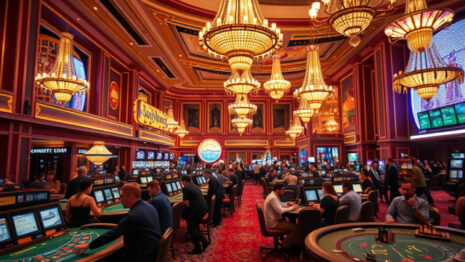
Casino environments—whether physical or digital—are carefully designed systems where every sound, light, color, and interaction has a psychological purpose. These elements are known as environmental cues, and they play a significant role in shaping how players think, feel, and ultimately make decisions during gameplay. While players may believe their choices are based purely on logic or chance, environmental cues subtly influence perception, attention, and behavior throughout the gaming experience.
Understanding Environmental Cues in Casino Settings
Environmental cues refer to all external signals in a casino that affect player behavior. These cues can be sensory (sound, visuals), structural (layout, pacing), or social (other players’ reactions). They operate continuously in the background and are often processed subconsciously.
Unlike direct instructions or rules, environmental cues do not tell players what to do. Instead, they shape how players interpret outcomes and how they respond emotionally to different situations.
Auditory Cues and Emotional Reinforcement
Sound is one of the most powerful tools used in casino environments. Every action—spin, win, bonus trigger, or even near-miss—is often accompanied by specific sound effects.
These auditory cues influence behavior in several ways:
Over time, the brain begins associating certain sounds with positive outcomes. This creates reinforcement loops where players feel encouraged to continue playing even after small wins or neutral results.
Visual Cues and Attention Control
Visual design plays an equally important role in shaping decision patterns. Casinos use color, motion, and lighting strategically to control attention and emotional response.
Common visual cues include:
These visual elements ensure that attention remains focused on the game rather than external distractions. They also intensify emotional reactions, making outcomes feel more significant than they statistically are.
Structural Design and Behavioral Flow
In physical casinos, the layout of the environment influences how players move and interact with games. Machine placement, lighting intensity, and spatial design all guide behavior without explicit direction.
For example:
In digital casinos, structural cues are embedded in the interface. Button placement, screen layout, and animation timing all influence how quickly and frequently players make decisions.
The Role of Repetition and Pattern Conditioning
Repetition is a key environmental factor that shapes long-term behavior. When players are repeatedly exposed to similar visual and auditory feedback, the brain begins forming associations between actions and outcomes.
This can lead to:
Even when outcomes are random, repeated exposure creates the illusion of predictability. This influences betting behavior by encouraging pattern-based thinking.
Social Environmental Cues
In many casino environments, especially live or multiplayer formats, social cues play a significant role. Observing other players’ reactions can influence personal decision-making.
Examples include:
These cues can create a sense of shared experience, which may increase confidence or risk-taking behavior. Players often subconsciously align their behavior with the perceived group mood.
Digital Interface Cues in Online Casinos
Online casino platforms rely heavily on interface-based environmental cues. These are designed to replicate the sensory stimulation of physical casinos while maintaining user engagement.
Key digital cues include:
Even small design elements, such as button size or animation speed, can influence how quickly players make decisions.
Subconscious Processing of Environmental Signals
One of the most important aspects of environmental cues is that they often operate below conscious awareness. Players may not actively notice them, but their behavior is still influenced.
This subconscious processing leads to:
Because these cues are continuous, they contribute to long-term behavioral conditioning.
Influence on Decision Patterns Over Time
Over extended play sessions, environmental cues collectively shape decision patterns. Players may begin to:
This influence is cumulative, meaning that small repeated exposures have a larger effect over time than any single event.
Conclusion
Environmental cues are a foundational element of casino design that significantly influence player behavior. Through sound, visuals, structure, repetition, and social interaction, these cues shape how decisions are made during gameplay. While often unnoticed, they create a powerful psychological framework that guides attention, emotions, and betting patterns. Understanding these cues is essential for analyzing how casino environments subtly influence human decision-making over time.