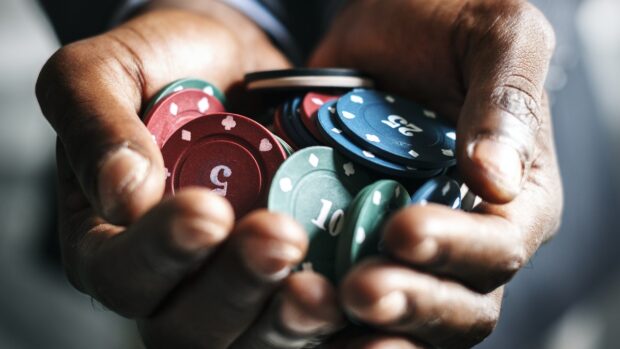
There is a very quiet kind of routine that people fall into, and what makes it different from typical habits is that it does not begin with a clear decision or a deliberate plan. Instead, it forms slowly, almost invisibly, through repeated actions that feel simple and harmless in the moment. A player may sit down with a light intention, perhaps to try a few rounds or pass a bit of time, and at the beginning, every action feels intentional. There is awareness, attention, and a sense of control over each step.
But as time moves forward, something soft begins to change.
The actions that once felt separate begin to connect. The player no longer pauses to think in the same way. Instead of making a fresh decision each time, they begin to move through a smooth and familiar flow. Without realizing it, a routine has started to form — not because it was chosen, but because it gradually built itself through repetition, comfort, and attention.
This type of routine is especially interesting because it feels natural, not forced. It does not feel like a habit forming. It feels like continuity.
At the beginning of any session, actions are clearly separated. A player places a bet, observes the outcome, and then consciously decides what to do next. There is a natural pause between steps, and this pause keeps the experience grounded in awareness.
However, as actions repeat, the brain begins to recognize patterns.

This is a well-studied effect in neuroscience. When the brain identifies repeated behavior, it starts to automate it in order to conserve mental energy. Tasks that once required conscious thought are gradually transferred to more automatic systems.
In simple terms, the brain becomes more efficient.
A behavioral study found that over 40% of daily actions are driven by habit rather than conscious decision-making, and gambling environments often accelerate this process because of continuous repetition.
As the player continues, the pauses between actions become shorter. The thinking becomes lighter. The process becomes smoother.
One player described this shift in a discussion:
“At the start, I was thinking about every move. After a while, I was just doing it. It didn’t feel like I was deciding anymore.”
This is where the hidden structure begins to form. Each action connects to the next, creating a chain. That chain becomes a routine.
Once a pattern is established, comfort begins to play a powerful role.
Familiar actions feel easy. They do not require effort or stress. The player begins to trust the process because it has repeated itself many times before. This sense of familiarity creates a calm mental state.
Psychological research shows that humans naturally prefer predictable environments because they reduce cognitive load. When something feels familiar, the brain does not need to work as hard.
In a casino or gaming environment, this comfort is amplified by design:
All of these elements work together to create a smooth experience.
A player once explained it this way:
“It feels easy to stay. Nothing interrupts you. You don’t feel like you need to stop because everything just flows.”
This comfort becomes self-reinforcing. The more familiar the routine becomes, the easier it is to continue. The easier it is to continue, the stronger the routine becomes.
As the routine strengthens, attention begins to shift.
Instead of thinking about the full experience, the player focuses on the present moment. The next spin. The next round. The next outcome.
This phenomenon is known as attentional narrowing, and it plays a major role in how routines stay hidden.
When attention narrows:
Research in gaming psychology has shown that players in immersive environments often lose track of time by up to 50%, because their attention is fully engaged.
A player shared a similar experience:
“I wasn’t thinking about how long I’d been there. I was just focused on what was happening next.”
This narrow focus makes it difficult to step back and see the pattern forming. The player is not observing the routine — they are inside it.
And when you are inside something, it becomes harder to recognize it.
Another important factor in the formation of routines is the presence of small triggers.
These triggers are not loud or forceful. They are subtle.
They include things like:
Each of these moments acts as a signal that encourages continuation.
Behavioral psychology describes this as part of a cue–routine–reward loop, where each cue leads naturally into the next action.
In gambling, this loop is continuous:
This seamless transition keeps the routine alive.
Studies on reinforcement behavior show that variable rewards (unpredictable wins) significantly increase repeated actions, because they keep the brain engaged and curious.
One player explained it like this:
“Even when nothing big happens, something always makes you want to go one more time.”
These small triggers do not feel like pressure. They feel like natural continuation.
One of the most interesting aspects of this process is that the routine does not feel forced.
The player still feels like they are choosing each step.
This is because each action, when viewed individually, is small and reasonable. There is no single moment where the player feels like they have committed to a long session or a pattern of behavior.
Instead, it feels like a series of simple decisions.
Behavioral studies show that people are more likely to continue an action when each step feels independent, even if those steps are part of a larger pattern.
This creates an illusion of control.
A player described it in a very honest way:
“It doesn’t feel like a routine. It just feels like I’m choosing to keep playing.”
And in a way, that is true.
But those choices are influenced by repetition, comfort, attention, and environment — all working quietly in the background.
Imagine a player starting a session with no intention of staying long.
At first, they play slowly and think carefully.
After a few rounds, they become more comfortable.
After ten minutes, the rhythm begins.
After twenty minutes, actions feel automatic.
After forty minutes, the player is fully inside the routine.
At no point did they decide to create a routine.
It simply formed.

This cycle is often shown as a circle because it has no clear beginning or end. Each action leads into the next, forming a continuous loop.
The most important truth about routines like this is simple.
They are not created by force.
They are created by connection.
Small actions connect. Patterns form. Attention narrows. Comfort grows.
And slowly, a routine appears.
But awareness changes everything.
When a player begins to notice the pattern, they create a small space between actions. That space allows for reflection.
Instead of moving automatically, they can ask:
This awareness does not remove the experience. It simply brings clarity to it.
The routines that shape behavior are often the ones we never consciously choose.
They form quietly, built from repetition, comfort, attention, and small triggers that connect actions together.
Each moment feels simple. Each step feels harmless.
But together, they create a path.
And understanding that path allows a person to move through it with greater clarity — not by resisting it, but by recognizing it.
Because once something is seen clearly, it is no longer invisible.
And when it is no longer invisible, it becomes something that can be understood, shaped, and guided with awareness.