
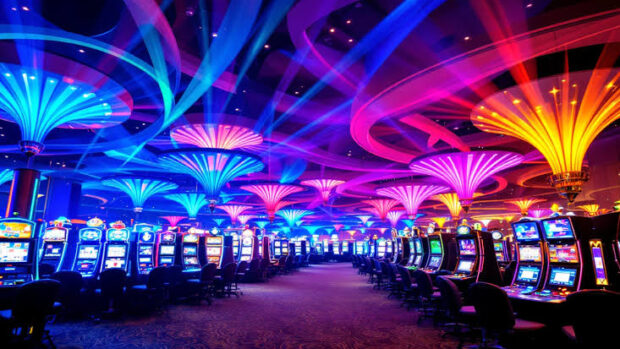
The Sensory Side of Casino Design
A casino environment is shaped by more than its physical layout. Lighting, music, ambient noise, display screens, and sound effects contribute to the atmosphere and influence which details attract attention.
These elements are part of environmental design. They can help define different areas, make certain features more noticeable, and establish a recognizable identity. Their effects, however, depend on how they are used and how individual visitors respond to them.
How Lighting Directs Attention
Lighting helps people distinguish objects, recognize pathways, and notice particular features within a room. Brighter areas can draw attention, while softer lighting may create a more subdued atmosphere.
In casino settings, illuminated signs, decorative fixtures, and display screens may stand out against darker surroundings. Changes in brightness and color can also make an area feel visually distinct from nearby spaces.
Lighting is not simply decorative. Poorly placed fixtures can create glare, reduce visibility, or make signs difficult to read. A well-planned design balances atmosphere with comfortable sightlines, accessible routes, and adequate general illumination.
Sound and Emotional Response
Sound can influence the way people experience a space. Background music may establish a particular mood, while announcements and localized audio help communicate information. Short sound effects can also make an event more noticeable.
In a casino, these sounds may overlap with conversations, machines, and movement throughout the venue. A busy acoustic environment can feel energetic, but excessive noise can make communication difficult or contribute to sensory discomfort.
The effects of sound are not identical for everyone. Some visitors may enjoy a lively environment, while others may prefer quieter areas. Providing spaces with different noise levels can make an entertainment venue more comfortable for a broader range of people.
When Sensory Cues Compete for Attention
Attention is limited, so several bright displays or overlapping sounds can compete with one another. If every screen flashes and every activity produces a prominent sound, visitors may find it harder to identify relevant information.
Designers can manage this competition by establishing priorities. Directional signs should remain visible, important announcements should be understandable, and decorative effects should not obscure essential information.
In digital casino interfaces, similar principles apply. Animation and audio can provide feedback, but excessive effects may distract users from controls, rules, or account information.
Responsible and Accessible Design
Environmental design should consider comfort, accessibility, and user choice. Clear signage, suitable lighting, manageable sound levels, and quieter spaces can help visitors navigate the environment without unnecessary strain.
Designers should also avoid using sensory effects to obscure important information or pressure people into decisions. Entertainment and usability can coexist when visual and audio elements have clear purposes.
Designing With Sensory Awareness
Sound and lighting shape how a casino environment is perceived by directing attention and contributing to its atmosphere. Their influence is strongest as part of a wider design system that includes architecture, signage, and spatial organization.
Thoughtful sensory design does more than create an immediate impression. It helps make an environment understandable, comfortable, and coherent for the people using it.